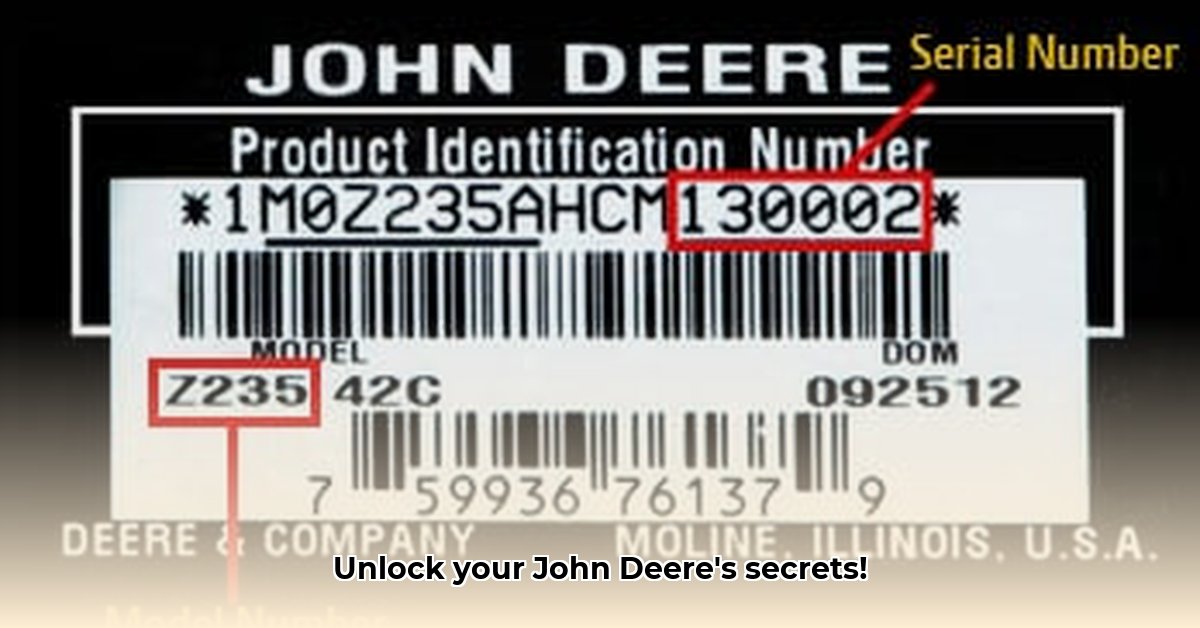
Tractor Serial Numbers John Deere: Unlocking Your Tractor's History and More
That seemingly random string of numbers and letters on your John Deere tractor's serial number plate holds a wealth of information. It's not just a code; it's a detailed history of your machine, crucial for maintenance, parts sourcing, and even understanding its environmental impact. This guide will teach you how to decipher this code, providing actionable insights for sustainable farming practices. For a dedicated search tool, check out this John Deere serial number lookup.
A Trip Down Memory Lane: The Evolution of John Deere Serial Numbers
John Deere's serial number system reflects the company's growth and technological advancements in agriculture. Early tractors had simple, short numbers, providing basic identification. As John Deere expanded its models and manufacturing processes became sophisticated, serial numbers evolved into longer sequences, often 13 to 17 digits, containing significantly more detail. Understanding this evolution is key to correctly interpreting the information they provide. Isn't it fascinating how a simple number sequence can reflect such significant technological progress?
Finding and Decoding Your John Deere's Serial Number: A Step-by-Step Guide
Let's decode those numbers and unlock the story of your tractor.
Step 1: Locate the Serial Number Plate. This metal plate is usually attached to the tractor's frame, often near the engine. Clean it for easier reading.
Step 2: Carefully Record the Serial Number. Accurately copy the entire serial number. Even one wrong digit can lead to incorrect information. Use pen and paper or a clear photo.
Step 3: Unlocking the Secrets: Using Online Resources. Several resources can decode your serial number. John Deere's website ( [1] https://www.deere.com/ ) and third-party sites offer tools to input the number and receive detailed information, typically including:
- Year of Manufacture: Crucial for maintenance scheduling and assessing the tractor's age.
- Model Number: Essential for finding correct parts and manuals.
- Place of Manufacture: Interesting historical data, potentially indicating regional variations in specifications.
Step 4: Digging Deeper (Optional). Advanced online searches may provide even more specific data, such as original equipment, factory-installed options, and the initial shipping date. The depth of information available is truly remarkable.
What You Can Do With This Information: Practical Applications
The decoded information offers significant practical benefits:
- Maintenance Scheduling: Knowing your tractor's age and model helps create an effective maintenance schedule, reducing downtime and extending its life.
- Streamlined Parts Sourcing: The exact model number ensures you order the correct parts, eliminating guesswork.
- Assessing Your Tractor's Value: Complete historical data aids in accurately assessing its market value if you're considering selling.
- Environmental Impact and Sustainable Farming: Understanding fuel efficiency and the availability of parts helps in making environmentally conscious decisions about maintenance and repairs. Older tractors may consume more fuel and have a larger environmental footprint, influencing choices about upgrades or replacing equipment.
Navigating the Challenges of Maintaining Older John Deere Tractors
Maintaining older equipment involves unique challenges. It's important to understand and address these risks proactively
| Risk Factor | Mitigation Strategy | Potential Impact |
|---|---|---|
| Difficulty Finding Original Parts | Explore aftermarket parts, consider refurbishment, or rebuilding. | High |
| Higher Fuel Consumption | Implement fuel-efficient driving practices; explore fuel additives. | Moderate |
| Increased Repair Costs | Proactive maintenance schedule; build a relationship with a mechanic. | High |
| Environmental Concerns | Proper fluid maintenance & disposal; adherence to regulations. | High |
The Bigger Picture: Sustainability and Your John Deere Tractor
Your tractor's serial number isn't merely an identifier; it's a tool for sustainable farming. The information it unlocks helps make informed decisions impacting resource management, leading to more responsible, environmentally friendly practices. By extending your tractor's lifespan through careful maintenance, you contribute to a more sustainable agricultural future.
How to Decode John Deere Tractor Serial Numbers for Sustainable Parts Sourcing
Understanding your tractor's history is crucial for sustainable parts sourcing, reducing waste and minimizing environmental impact. The information from the serial number guides you toward responsible choices. Careful decoding minimizes the environmental cost of unnecessary manufacturing and replacement.
Key Takeaways:
- John Deere tractor serial numbers are critical for maintenance, parts sourcing, and assessing the machine's environmental impact.
- Deciphering these numbers are key for informed decisions about repairs and upgrades for sustainable agriculture.
- Understanding your tractor's history improves resource management and extends its useful life, contributing significantly to sustainability.
- Online resources and John Deere databases are valuable, but independent verification is essential.
A Brief History of John Deere Serial Numbers
The evolution of John Deere's serial number system provides valuable insight into the history of agricultural technology. Early systems were simpler, sometimes making precise identification challenging. As manufacturing advanced, serial numbers evolved to reflect these changes, offering detailed machine specifications.
Locating Your Tractor's Serial Number Plate
Finding the serial number plate is the first step. It’s usually a metal plate attached to the tractor's frame or engine. A thorough cleaning might be necessary.
Step-by-Step Decoding
The decoding process varies slightly depending on tractor age, but a consistent methodology applies:
- Record the Number: Write it down carefully.
- Initial Digit Analysis: Often useful in determining the year of manufacture.
- Utilize Online Resources: John Deere and third-party websites offer decoding tools. Cross-reference information is key to accuracy.
- Verify the Data: Ensure accuracy by cross-checking information from multiple sources.
Interpreting the Decoded Data
Decoded numbers reveal vital information:
- Manufacturing Year: Essential for determining age and technological characteristics.
- Model Number: Crucial for parts identification and maintenance.
- Factory Code: Provides data on manufacturing variances or material sourcing that impacts sustainability.
- Engine Specifications: Helps maintain optimal fuel efficiency, a core of sustainable agriculture.
Advanced Techniques for Parts Sourcing and Sustainability
For older tractors, sourcing parts can be challenging. The factory code can help locate specialized suppliers or explore parts recycling and restoration, aligning with sustainable practices.
The Sustainability Connection
Responsible parts sourcing minimizes landfill waste and environmental impact. Understanding your tractor's serial number is key to achieving this goal. The value of this knowledge extends far beyond simple maintenance; it's directly tied to the future of sustainable agriculture.